Saint Rembert (c. 830 - June 11, 888) was Archbishop of Hamburg-Bremen and is still highly revered in the city. Throughout history, numerous churches and parishes in Bremen have borne her name. The first Remberti church was a small chapel built at the beginning of the 14th century. The second St. Rembert's Church was built in 1596 near the St. Rembert's Foundation Hospital in the rebuilt eastern suburbs. This Calvinist church was looted and destroyed during the 30 Years' War. The third church, St. Rembert's, was built in 1738, and in the 1800s a parish and monastery were built around the church. The fourth St. Remberti Church was built in 1871 based on the designs of Heinrich Müller as a neo-Gothic, three-nave brick building with two side aisles. The church was completely destroyed during a bombing raid during World War II.
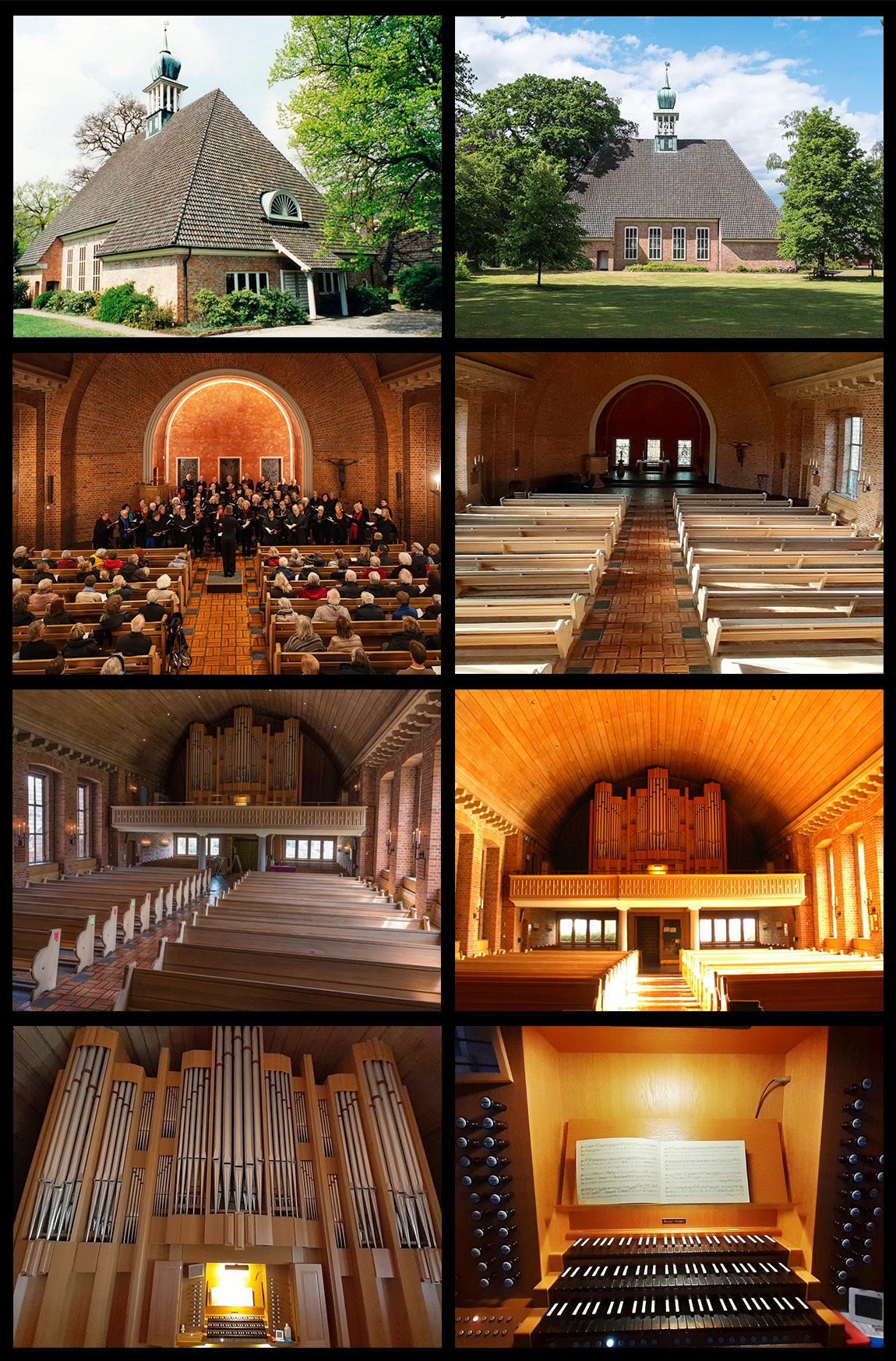
The fifth St. Rembert Church was built as a new building in Bremen-Schwachhausen in 1950-51, based on the designs of the renowned architect Berhard Gildemeister (1897–1978). This church and the complex of buildings around it are under monument protection.
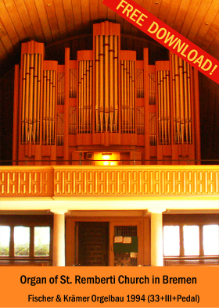
The church's first organ, a small instrument made by Gustav Brönstrup (Hude). In 1967, the Emanuel Kemper & Son organ workshop in Lübeck built a 32-stop, three-manual and pedal organ. This organ deteriorated over the years, so it was decided to build a new organ, which was made by the Fischer & Krämer organ factory in 1994. It is a 33-stop, mechanical organ with three manuals and pedals. The organ's disposition follows the style of Baden-Alsatian-type Baroque organs.
The recording for the hauptwerk sample was made by Dr. Dr. Michael Lütge a few years ago. He prepared the audio files and did the main work. I did the fine-tuning of the files, created simple graphics and edited the ODF file. This hauptwerk sample is the result of the work of the two of us, of which Michael took on the greater part. This sample is our third joint work, and I hope that our collaboration will continue.
The following friends helped me to make and publish the sample set (in alphabetical order): Dominique Dantand, Gérard Lefranc, Nagy István and Jean-Pierre Silvestre. If something's done well, it's thanks to them. Thank you for their work.