

Grenzing Organ from Geneva
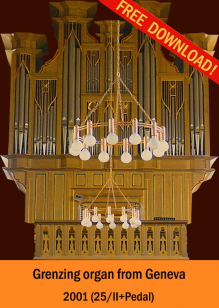
The sample sets are made in two forms.
a. The original stereo mix 'semidry'. The reverb is 1-1.5 s, reflects the original acoustics of the church.
b. The 4-channel version made with a 4 s artificial reverb and wet/dry ratio can be controlled.
Hauptwerk v4.2 or v5-9 supported for the Organ Definition Files.
The compass of the manuals of the original version are 56 keys, the extended version are 58 keys.
The compass of the pedal of the original version are is 30 keys, the extended version are 32 keys.
Normal Hauptwerk installation (described in the HW manual) is all that is necessary if stop control is by mouse or touchscreen. However, an extra installation step is required to allow MIDI control of the virtual stops from an organ console with real stop-knobs or stop-tabs. It will also be necessary if using an external MIDI sequencer to control the organ.
A brief guide on doing this can be downloaded here. Special thanks to Adrian Wheal, who made this the manual.
|
RAM requirements (GB) |
stereo |
surround |
||
|
|
16 bit |
24 bit |
16 bit |
24 bit |
|
Grenzing Geneva |
5 |
8 |
10 |
17 |
|
Pedal (original 30, virtual 32 keys) Soubbasse 16', Octave 8', Octave 4', Choralbass 4' Posaune 16', Trompette 8' |
|
Great (original 56, virtual 58 keys) Bourdon 16', Principal 8', Bourdon 8', Gambe 8' Oktave 4' Flute conique 4', Nasard 2 2/3' Octave 2', Tieerce 1 3/5', Mixture 4f Cornet 3f (from C and from C#) Trompette 8' |
|
Positiv (original 56, virtual 58 keys) Quintaton 8', Flute a chem. 8', Principal 4', Flute 4' Flute 2', Sesquialtera 2f , Scharf 3f Vox humana 8' |
|
Couplers: P+I, P+II, I+II bass, I+II discant Tremulant: original: II extended: + I |
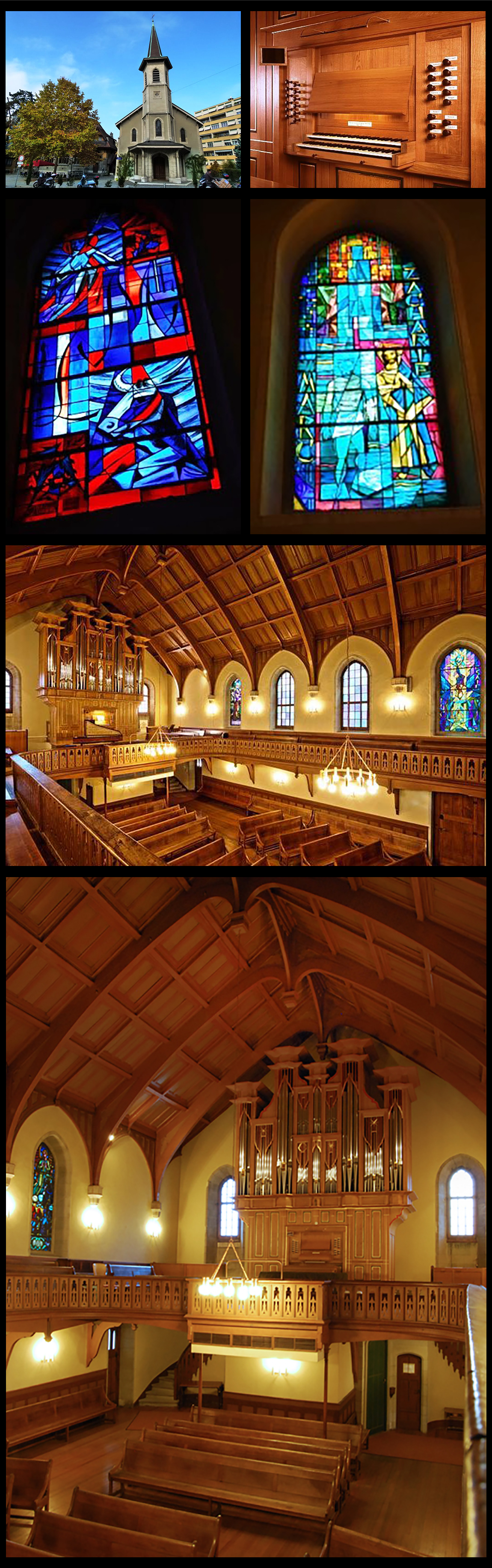
You can download this from the website of the owner of the sample, AOEV.